There was a time when Buzz Lightyear represented the height of technology.
He had wings, flashing buttons, a laser, and a voice box full of suitably heroic declarations. Next to Woody, with his pull string and stitched waistcoat, Buzz looked as though he had arrived from another century. To a child in 1995, he practically had.
Three decades later, Buzz has started to look, well, old? Analogue? However you want to put it.
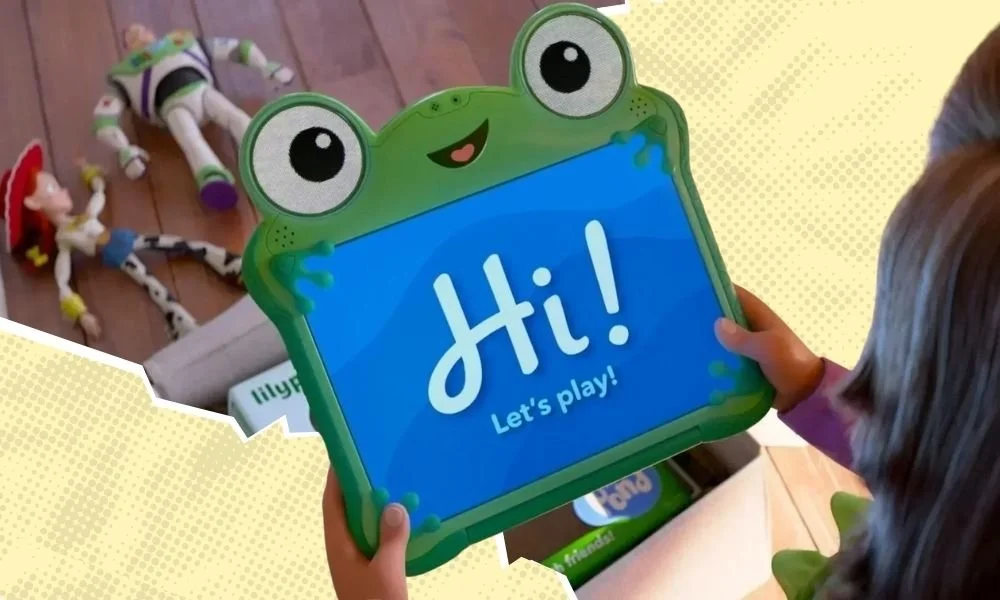
In Toy Story 5, eight-year-old Bonnie has a new object competing for her attention: Lilypad, a frog-shaped smart tablet. For a series that has spent 30 years following the changing relationship between children and their toys, the arrival feels remarkably familiar, there has always been something newer waiting to enter the bedroom.
The difference is that the audience has changed, too.
Andy’s generation has grown up
Many of the children who first met Woody and Buzz now have children of their own. They remember a childhood of toy boxes, video tapes, games consoles, family computers, and eventually mobile phones, while watching their own children grow up with screens that have been present almost from birth.
That makes Bonnie’s attachment to Lilypad instantly recognisable, it belongs to the everyday texture of modern family life like the tablet brought along for a journey, the extra half-hour negotiated before bed, the screen that can entertain a child while dinner is being made.
Woody and Buzz have spent decades learning that children grow up, but now, they’re meeting a childhood that has grown up around them. The original Toy Story began with Woody discovering that childhood tastes change, and Buzz eventually had to make the same discovery. The arrival of Lilypad gives both characters another glimpse of what “new” looks like.
Nostalgia looks different after 30 years
Recently, Hollywood has been finding new reasons to return to films that audiences thought they had left behind. Sequels are appearing years, sometimes decades, after the original stories ended, while familiar characters and franchises are being introduced to audiences who weren't around for them the first time.
Top Gun: Maverick brought Tom Cruise back to a role he first played in 1986, while Michael Keaton returned as Beetlejuice nearly 40 years after the original. More recently, Freakier Friday revisited a film that became a fixture of 2000s childhood, and the upcoming Practical Magic 2 and The Devil Wears Prada 2 are returning to films whose audiences have had years to build an affection for them. These aren’t stories that have disappeared from popular culture in the meantime; they’ve been rewatched, quoted, shared, and, eventually, passed on to another generation.
Woody and Buzz now belong to more than one childhood
One of the pleasures of a character surviving for 30 years is watching their meaning change without the character necessarily changing very much at all.
Their friendship remains recognisable, their personalities familiar, and their faces virtually inseparable from Pixar itself.
The people looking back at them are different.
Some will be children meeting these characters for the first time, with little reason to think of them as nostalgic objects. Others will arrive carrying memories of Andy’s bedroom, Pizza Planet, Al’s Toy Barn, Sunnyside, and perhaps a collection of toys that once seemed every bit as alive as Woody and Buzz.
Toy Story 5 has the unusual opportunity to place those audiences next to one another.
Lilypad fits comfortably into that picture. She belongs to Bonnie’s childhood in the same way that Woody once belonged to Andy’s, and her presence reflects how much has happened beyond the edges of the toy box since 1995.
The technology has changed, the children have changed, and the adults watching have certainly changed.
Woody and Buzz are still here. For a franchise that has spent 30 years watching children grow up, there’s something rather lovely about that.